
The internet is currently drowning in travel advice written by weekend holidaymakers or lifestyle influencers whose ideas of “budget travel” include booking a slightly cheaper boutique hotel. If a guide tells you to save money by “bringing a reusable water bottle” or “booking your flights in incognito mode,” close the tab.
My Travel Hacks eBook is now available for purchase through Gumroad.

In another lifetime, my dad used to do private work for David Tomlinson, you know, the actor who played the father, Mr Banks, in the film Mary Poppins, starred in Bedknobs and Broomsticks and the Herbie films, amongst many others.
His advice – and he was rich AF – to my father, who worked all hours God sent to keep the house, mum and two (at that time) kids, was “look after the pennies and the pounds will look after themselves.”
This advice is just as apt as you can get.
This blog is primarily for people with more time than money, but of course, everyone can learn a thing or two.
The hacks mentioned here can be applied to any country in the world.
You have to weigh up the pros and cons.
After a lifetime on the road, I could list a hundred travel hacks to save you time, money, and countless headaches, but here are my six best simple yet effective travel hacks that require little to no effort on your part.
Since this post was written, I have released a PDF/ebook titled “Travel Hacks: How to Travel the World on a Budget”.
1. Out of network ATM withdrawal fees

Not all banks are created equal. International ATM withdrawal fees vary considerably. Some ATMs offer free withdrawals. Most do not.
In Mexico, there are no ATMs that offer free withdrawals. Though some banks, notably in the US, offer their customers refunds on ALL fees incurred. Some banks, such as Scotiabank, let you use their ATMs abroad without racking up fees.
The Banbajio ATM charges just 23.20 pesos, yet the BBVA ATM charges a whopping 197 pesos.
The Al Barid ATM in Morocco was, until earlier this year, allowing free withdrawals. Now it is 35 Dirhams (3.75 USD).
Also:
- Use a bank like Monzo that doesn’t have international transaction fees (like NatWest)
- Always decline the conversion fee.
2. Does your hostel provide free coffee?

You can ‘waste’ a lot of money on coffee if you are not careful. Here in Mexico City, a small coffee at one of the many cafés will cost you upwards of 50 pesos.
But an 8-oz Americano at McDonald’s costs just 20 pesos. That’s one hell of a saving. McDonald’s serves up pretty good coffee. And the thing is, across the planet, you know what you are getting.
On my more recent travels, I found a McDonald’s in Paramaribo, Suriname, that didn’t even serve coffee. Imagine!
Some cafés here in Mexico City try so hard but fail to deliver. They can be a good place to get some work done if they are laptop-friendly. A change of scenery can be nice.
Tim Hortons is my new go-to place to get coffee now. A 10-oz Dark Roast costs just 35 pesos. And one is all I need.
But the point here is that going out for a coffee every day, sure, adds up. A 2-dollar coffee, five days a week- that’s 520 USD in a year. Hellishly expensive.
That’s why you need to check: does your hostel provide free coffee?
Getting the free breakfast is s a good deal, more so if you are a big coffee drinker.
Otherwise, get yourself a portable water heater, a mug, a jar of coffee, and you are set.
3. Alcohol

As with coffee, drinking beer is a massive waste of money.
A bar, pub, call it what you will, is your worst enemy. The markup on alcohol is incredible. The local supermarket and the hostel roof-top and balcony are your new best friends.
A 330 ml bottle of Corona will set you back 50 pesos in a cheap bar. If you are with friends, get a bucket of six and save yourself a few pesos.
I used to buy a six-pack of Carta Blanca 330ml at the local Bodega Aurrera, now 67 pesos. That’s just 11 pesos a can. 40 pesos saved right there when compared to the cheapest find in a local bar.
If you prefer the stronger stuff, the country you should head to is Russia. In Russia, vodka is cheaper than water.
Have you ever considered why vodka is so cheap? It stops the alcoholics from drinking antifreeze.
I no longer drink beer. Big savings!
4. Accommodation Strategy: Ditch Advance Bookings for Walk-Ins
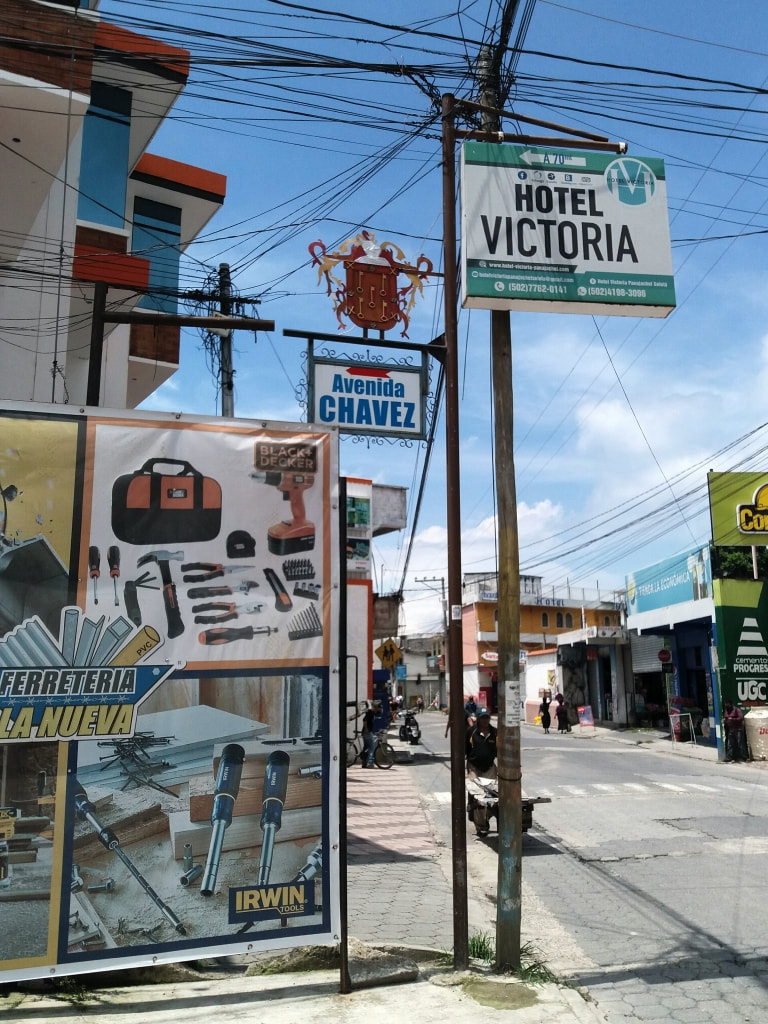
Booking platforms are incredibly convenient, but relying on them blindly for long-term travel creates two major budget leaks: currency conversion markups and hidden commission fees passed onto the guest. Furthermore, they trap you in a rigid itinerary.
My preferred Modus Operandi for finding the best accommodation deals depends on where I am.
When I am travelling off-the-beaten-track, my best resource is Google Maps. Most hotels, however small, do have a listing on Google Maps, but most are not listed on any booking platform.
I am looking for one-star hotels. I like it, when someone has posted photos. I want a room without luxury. A room with just a bed, chair and table suits me just fine.
I prefer shared bathrooms because many have plumbing issues and the smell is sometimes too much, so I prefer that the bathroom is down the corridor.
If there is a contact number, I will try to get in touch with them. If not, I will aim to arrive mid-afternoon, which basically guarantees me a room.
Hostels like these only accept cash, which is fine for me, as I am used to that.
If I am backpacking in Europe or Central and South America, all hostels can be found on all the booking platforms, because if they ain’t listed, they won’t get any guests. Making bookings for accommodation has become the norm.
I make my choice, and they try to contact the hostel/hotel directly and ask what the price is.
More often than not, organising a room directly will get you a better deal, but not always.
Having a booking for a few nights gives you peace of mind when arriving somewhere late at night; you know you have a place to stay. Popular destinations get booked up early. In the high season, sometimes it’s impossible to get a room or a dorm bed. You have to plan ahead.
I don’t like to book more than a few days. You don’t know how the place will be. Many reviews are spammed, photos are photoshopped, and having everything booked traps you into a rigid itinerary. But sometimes it is actually necessary.
5. Flying

The best deals on flights are for those that leave (mostly) at inconvenient times.
When I still had a base in England, at my dad’s, Luton Airport was the nearest. But getting there for even a 9 am flight necessitated taking a 30 quid taxi. Christ knows what it costs now.
The local train station was an 11-minute walk away. Trains to Euston used to run frequently, and it was easy to jump on the Tube to LHR where there are flights at a considerably more convenient time, with no need for a peak-time rail ticket to London; you could check in up to 20 kg for free, and they used to feed you.
For me, the extra I paid for these flights over the cheap and nasty budget airline flights was outweighed by the comfort and convenience and the costs involved in getting to the airport at an unsociable time. #FalseEconomy.
6. Travel Light

I can’t recommend enough, the concept of travelling light.
I travel light, so I do not have to rely on public transport or taxis to get to and from my hotel, saving myself money in the process.
‘Why take a taxi when you can take a bus or metro? Why take a bus or metro when you can walk?’
I like to choose a hotel that is no more than six km from the bus station and no more than three km from the city centre.
After an 18-hour bus ride, I relish the idea of stretching my legs again. Who wants to sit or stand in a bus or taxi after having been immobile for so long? Hell, I love a good walk, even after just a two-hour bus ride.
If you’re a long-term traveller, but are moving every few days, staying in a room 15 km from town, the cost of getting public transport all the time sure adds up.
I have travelled through 130+ countries; more than 1000 different cities, towns, and villages and my preferred method of getting to and from the hostel and to explore, once I have arrived, is to walk.
Walking is free, but refusing to take a taxi, the short distance from the bus station to my hostel in Cape Town, nearly cost me everything after I was attacked by two guys at knifepoint.
In Bali, Senegal, China and many other places, I have walked with all my stuff, all freaking day.
In another life, I walked 1071 miles from Land’s End to John o’Groats for fun. So I am not averse to this MO.
But I am happy to say I took a taxi from the bus station in Tegucigalpa when backpacking in Honduras. I weigh up the odds. Putting yourself at risk is not worth the 4 USD taxi ride.
Even in CDMX, the main bus station is within walking distance, but it would mean passing through some sketchy areas. In Mexico City, the metro costs just 5 pesos. Never put yourself at risk for the sake of a metro fare.
In Belém, I took an InDrive (Uber alternative) several times. Worth its weight in gold.


Way cool that your dad worked for David Tomlinson; I remember him more for Bedknobs and Broomsticks and the Herbie films.
All excellent tips here. I travel light because we are fully nomadic. Backpack. Carry on. Clothes for 1 week. That is it. We are not stuffing the car like a bunch of pack rats. Our physical possessions fit easily in the trunk with room to spare.
I think I’m still on page 1 for a review I did of EasyHotel in Luton.